Safeguarding Seniors from Online Romance Scams
Online romance scams are on the rise, and seniors are often targeted. Learn how to recognize the red flags, start conversations with loved ones, and take practical steps to keep them safe.
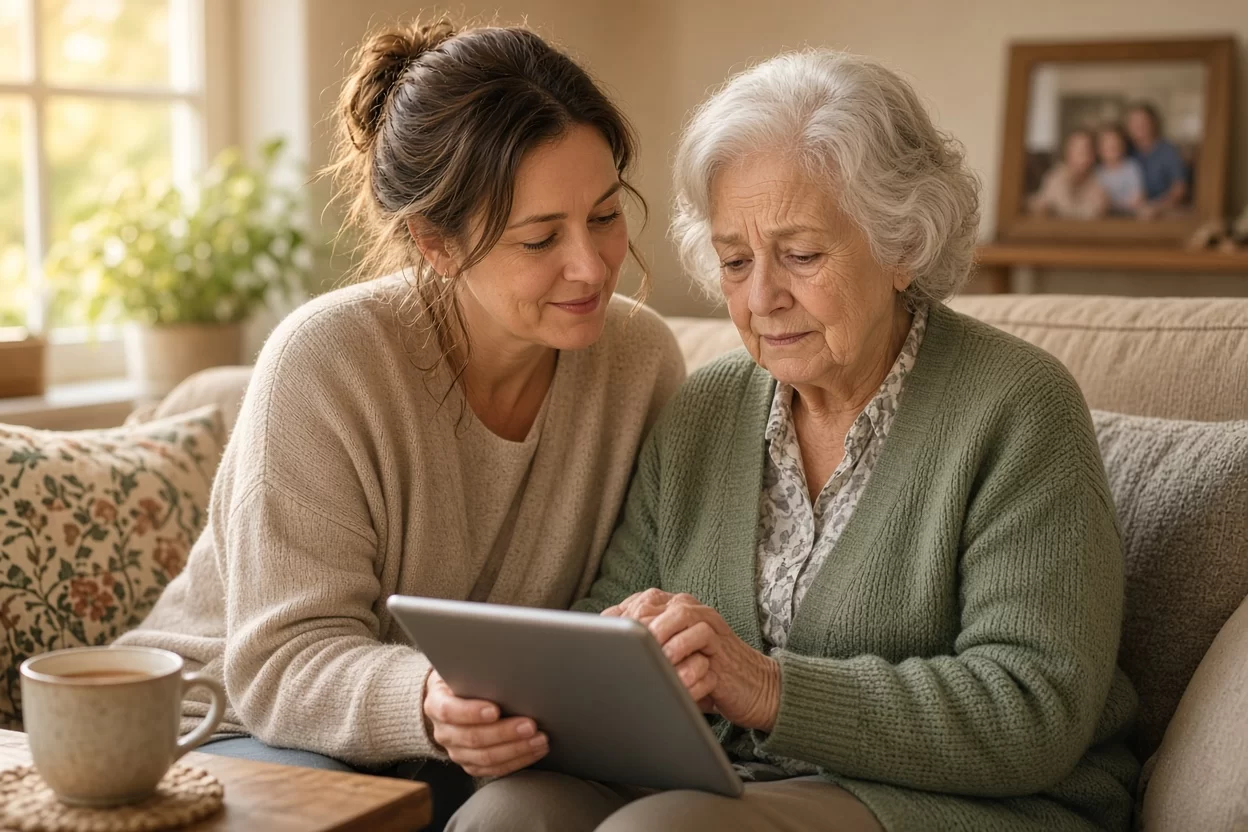
When 72-year-old Margaret first mentioned a man she had met online, her daughter, Susan, was thrilled. Margaret had been widowed for five years, and Susan was happy to see her mother smiling again. The man, who called himself David, was a retired engineer from London. He sent sweet messages, called every day, and even sent flowers. But as weeks passed, David started to have problems. A medical emergency, a business deal gone wrong, a lost passport. Each time, he needed money, and Margaret, eager to help the man she had come to love, sent thousands of dollars. It was only when David asked for her social security number that Susan noticed the pattern. The heartbreak was immense, but the financial loss was devastating. This story is far too common, and it is time to talk about it openly.
As a home care agency that has walked alongside countless families, we know that loneliness and the search for connection can make anyone vulnerable. The internet, which offers a world of possibility, also opens a door to those with malicious intent. Romance scams, also known as catfishing, are a growing threat, and seniors are increasingly targeted. According to the Federal Trade Commission, reported losses to romance scams reached a staggering number in recent years, and the true figure is likely much higher. But the good news is that with knowledge, open communication, and a little vigilance, you can help your loved one navigate the digital world safely.
Understanding the Anatomy of an Online Romance Scam
To protect someone, you must first understand how a scam works. These are not random, clumsy attempts. They are carefully constructed operations that follow a predictable pattern. The scammer creates a fake profile on dating sites, social media, or even online gaming platforms. They often use stolen photos of attractive people, often in the military, as doctors, or as engineers working overseas. The profile is designed to be appealing and trustworthy.
Once they make contact, they move quickly to build a deep emotional bond. They will communicate multiple times a day, often professing love within a few weeks. They will ask about your loved one’s life, listen intently, and mirror their interests. They may even send small gifts or flowers to create a sense of intimacy. This phase is called ‘grooming,’ and its purpose is to create a strong emotional dependency. The scammer is patient and will wait until the victim is fully invested before making a request.
The request always comes. It is a sudden emergency that requires money, gift cards, or access to bank accounts. It might be a plane ticket to finally meet, a medical bill for a sick child, or a legal fee for a sudden problem. The story is always urgent and always requires immediate, secretive action. The scammer will often discourage the victim from telling family or friends, saying that they do not understand or that the relationship is special and private. This is a major red flag.
Why Seniors Are Particularly Vulnerable
Seniors are not naive, but they have a unique set of circumstances that make them attractive to scammers. Loneliness is a powerful factor. After losing a spouse, retiring from a career, or living alone, many seniors feel a deep need for companionship. The online world offers a promise of connection, and a scammer provides attention and affection that feels real.
In addition to emotional vulnerability, many seniors have significant savings or retirement funds, making them financially attractive to criminals. They may also be less familiar with digital technology, such as how to verify a person’s identity or spot a phishing attempt. They may not be aware that a profile picture can be reverse-searched to see if it belongs to someone else. This combination of emotional need and financial means creates a perfect storm.
Additionally, seniors may be more trusting of authority figures or people who present themselves as respectable. A scammer who claims to be a doctor, an engineer, or a military officer may be seen as credible. They may also be less likely to report the scam due to shame or embarrassment, allowing the scammer to continue with minimal risk. Understanding these factors can help you approach the conversation with empathy, not judgment.
Recognizing the Red Flags of a Romance Scam
There are several warning signs that, when present, should raise your concern. It is important to remember that a single red flag might be a coincidence, but a combination of several should be taken seriously. The most common red flags are outlined below.
- Profile is too good to be true: The person has a very attractive photo, a high-status job, and a perfect life. They are always in a different location, often overseas.
- Rapid escalation of feelings: They declare love within days or weeks, and they immediately want to move the relationship to a private channel like a personal email or phone call, away from the dating site.
- Vague personal details: They are not able to answer basic questions about their life, or they offer inconsistent stories. They avoid video calls, often citing a broken camera or a job that prevents them.
- Requests for money: The most critical red flag. They ask for money, gift cards, or wire transfers for any emergency, even if they promise to pay it back. They may also ask for you to help them access your bank account.
- Secrecy and isolation: They ask you to keep the relationship a secret and discourage you from telling family or friends. They may become angry or guilty if you mention them to others.
- Sudden disappearance: They may disappear for a few days, then return with a dramatic story about a crisis that requires your financial help. This is a form of emotional manipulation.
If you notice any of these signs in a person your loved one is speaking to, it is time to act. But it is important to approach the situation with care. Your goal is to protect your loved one, not to embarrass them or make them feel foolish. The scammer has built a strong emotional bond, and they will likely defend the relationship. Your approach matters.
How to Talk to Your Loved One About Online Romance Scams
Opening a conversation about a potential scam is delicate. It is essential to start from a place of love and concern, not accusation. Begin by sharing your own concerns about the rise of online scams, without pointing fingers at their specific relationship. You can say, ‘I read an article about online scams, and it made me want to talk to you about how we can both stay safe online.’ This makes it a shared concern, not an attack on their judgment.
Then, ask open-ended questions. Listen more than you talk. Ask about their friend, their history, and their plans. Show genuine interest. This will help you understand the relationship and maybe find a pattern. For example, you can ask, ‘How did you meet? What do you enjoy talking about?’ This is not to interrogate but to understand.
If you notice a red flag, share it as a fact, not as an accusation. For example, you might say, ‘I noticed that he says he is a doctor in London, but he has never video called. That seems a little unusual. What do you think?’ This invites them to think critically without feeling attacked. It is also important to avoid ultimatums. Do not say, ‘If you keep talking to him, I will not help you.’ Instead, offer your support: ‘I am here for you, and I want you to be safe. Can we look at this together?’
Practical Steps to Help Protect Your Loved One
Beyond conversation, there are concrete steps you can take to reduce the risk. The first is to help them create a secure online environment. This includes using strong, unique passwords for all accounts, enabling two-factor authentication, and being cautious about what personal information they share publicly. Encourage them to keep their profile private on social media and to ignore messages from strangers.
Another essential step is to help them research the person they are talking to. Teach them how to do a reverse image search on the profile picture. If the same photo appears on other sites under different names, that is a major red flag. Also, encourage them to ask for a live video call. A genuine person will be able to do this, but a scammer will have a reason why they cannot. If they cannot, it is a good reason to be suspicious.
Create a system of accountability. Let your loved one know that they can always come to you with anything, even if they have already sent money. Reassure them that they will not be blamed. If they are already sending money, you may need to contact their bank or the local authorities at the Federal Trade Commission. In some cases, you can also set up a joint account or have a trusted family member monitor for unusual transactions, but this should be done with their consent.
Finally, encourage your loved one to stay socially connected in the real world. Loneliness is a risk factor, so help them find community. This could be through a senior center, a place of worship, a hobby group, or even through a home care service that provides companionship. The more connected they feel to real people, the less likely they are to fall for a fake online relationship.
What to Do If Your Loved One Has Already Sent Money
If you discover that your loved one has already sent money, do not panic. The first step is to stop any further payments. Contact their bank or credit card company immediately to report the scam and see if any transactions can be reversed. If they have used a wire transfer, contact the wire transfer provider, such as Western Union or MoneyGram, and ask to report the fraud. If they used gift cards, contact the gift card provider as soon as possible.
Next, report the scam to the authorities. The Federal Trade Commission (FTC) has an online complaint form, and they also have the Internet Crime Complaint Center (IC3) which is run by the FBI. Reporting the scam can help law enforcement track the criminals and may prevent others from being victimized. You can also report the fake profile to the website where the scam took place, such as a dating site or social media platform. This can get the profile taken down and prevent further harm.
Finally, provide emotional support. Your loved one may feel ashamed, embarrassed, and betrayed. They may also be in financial distress. Reassure them that they are not alone and that scams are sophisticated. Help them focus on the future, not on the past. Consider joining a support group for scam victims, or speaking with a financial counselor. Your local area may have resources for elder fraud victims, so do not hesitate to seek help.
Using Technology to Build a Safer Digital Life
Technology can be a powerful ally in the fight against scams. There are several tools you can use to add an extra layer of security for your loved one. Consider setting up parental controls on their devices, or using privacy settings that limit who can contact them. You can also install a spam filter on their email and phone to block unsolicited messages.
You can also use a phone app that identifies and blocks scam calls. Many seniors receive scam calls from the same people who run online romance scams. Apps like Nomorobo or Truecaller can help filter out these calls. Additionally, you can help them understand how to spot phishing emails and text messages, which are often the first point of contact. A simple rule: never click on a link or download an attachment from an unknown sender.
Another helpful tool is a password manager. This can help your loved one create and store strong, unique passwords for each account. It is also a good idea to enable two-factor authentication on their email, bank, and social media accounts. This will add an extra step, but it is a small price to pay for peace of mind. You can also set up a shared family calendar to keep track of their online activities, but always do this with their consent.
Remember, the goal is not to control your loved one, but to protect them. The best approach is to work together. Set up a ‘digital safety night’ with your family, and go over the basics together. Make it a fun, learning experience, not a lecture. The more you help them, the more confident they will be online.
Building a Supportive Community for Seniors
The most effective defense against a romance scam is a strong support network. Loneliness is the fuel for these scams, so it is crucial to help your loved one build a fulfilling social life. This can start at home. Encourage your loved one to have regular visits with family, or to attend local events. If they are not mobile, consider a home care service that can provide companionship, not just medical care. A caregiver can offer conversation, accompany them on walks, and help them stay connected.
Many seniors find joy in volunteering, joining a book club, or taking a class. These activities provide structure and a sense of purpose. They also offer an opportunity to meet new, real people. Help your loved one find an activity that matches their interests. It could be a gardening club, a knitting group, or a lecture series at a local library. The key is to keep them active and engaged.
If your loved one is already using a dating site, help them understand how to use it safely. Many sites have built-in safety tips. You can also suggest they use a dating service that has stronger identity verification, such as a background check. However, it is important to remember that no service is perfect. The best protection is awareness and open communication. Let your loved one know that they can always come to you for advice or help, without a fear of judgment.
Finally, consider involving a professional. A geriatric care manager or a social worker can provide an objective perspective and help you create a safety plan. They can also be a neutral party in difficult conversations. They have experience with elder fraud and can offer practical guidance. If you are not sure where to start, you can always call our office for a free consultation. We are here to help you and your family navigate these challenges.
Frequently Asked Questions
How common are online romance scams among seniors?
Online romance scams are a significant problem, and they are particularly common among older adults. According to the Federal Trade Commission, in recent years, people 60 and older have reported the highest total losses to romance scams, with a median loss of over $2,000. The actual number of victims is likely much higher, as many are too embarrassed to report it. It is a growing issue, so staying informed is essential.
What are the first steps to take if I suspect my loved one is being scammed?
The first step is to gently start a conversation. Approach with empathy, listen, and avoid accusations. Share your concerns in a non-confrontational way. If you see a red flag, like a request for money, ask for more details. If you suspect they have already sent money, you need to act quickly to stop any further payments and report the scam to your bank and the authorities.
How can I block a scammer from contacting my loved one?
You can block a scammer on most social media and email platforms. On dating sites, use the ‘block’ or ‘report’ function. You can also set up call blockers on their phone. More importantly, help them change their passwords and enable two-factor authentication to prevent further access. If the scammer has their financial information, contact the bank immediately.
Are there any signs that my loved one is already a victim?
Signs include sudden changes in spending, a new partner they are secretive about, or a sudden need for money. They might also become more isolated, avoiding family and friends, or be very defensive about their online friend. They may also be receiving gift cards or wire transfers in large amounts. If you notice these signs, it is important to act.
What are some resources for reporting a romance scam?
You can report a romance scam to the Federal Trade Commission (FTC) at ReportFraud.ftc.gov, and to the Internet Crime Complaint Center (IC3) at ic3.gov. These are the primary federal agencies that handle these reports. You can also contact your local police or state attorney general’s office. Reporting the scam helps authorities track and stop the criminals.
Protecting a loved one from a scam is not an easy task, but it is one of the most important things we can do to ensure their safety and peace of mind. It is a journey that requires patience, understanding, and a willingness to have difficult conversations. But know that you do not have to do it alone. At Rockaway Home Care, we support families every day, not just with physical care, but also with the emotional and educational tools they need. If you have any concerns about your loved one’s safety, or if you just need someone to talk to, please do not hesitate to reach out to us for a free consultation. We are here to help you navigate these complex issues with care and compassion.
This article is for general informational purposes only and does not constitute medical or professional advice.
This article is general information, not medical advice. Please consult a qualified professional about your own situation.
More from the Rockaway Home Care blog
- Understanding Medicaid home care eligibility
- Top questions families ask about home care costs
- Choosing between live-in care and hourly home care
- How to create a home care plan for a loved one