
Bridging Generational Gaps: Music Playlists for Senior Care
Music has a unique power to connect generations and soothe the aging mind. This guide offers practical steps for building playlists that honor your loved one's history while inviting shared joy.
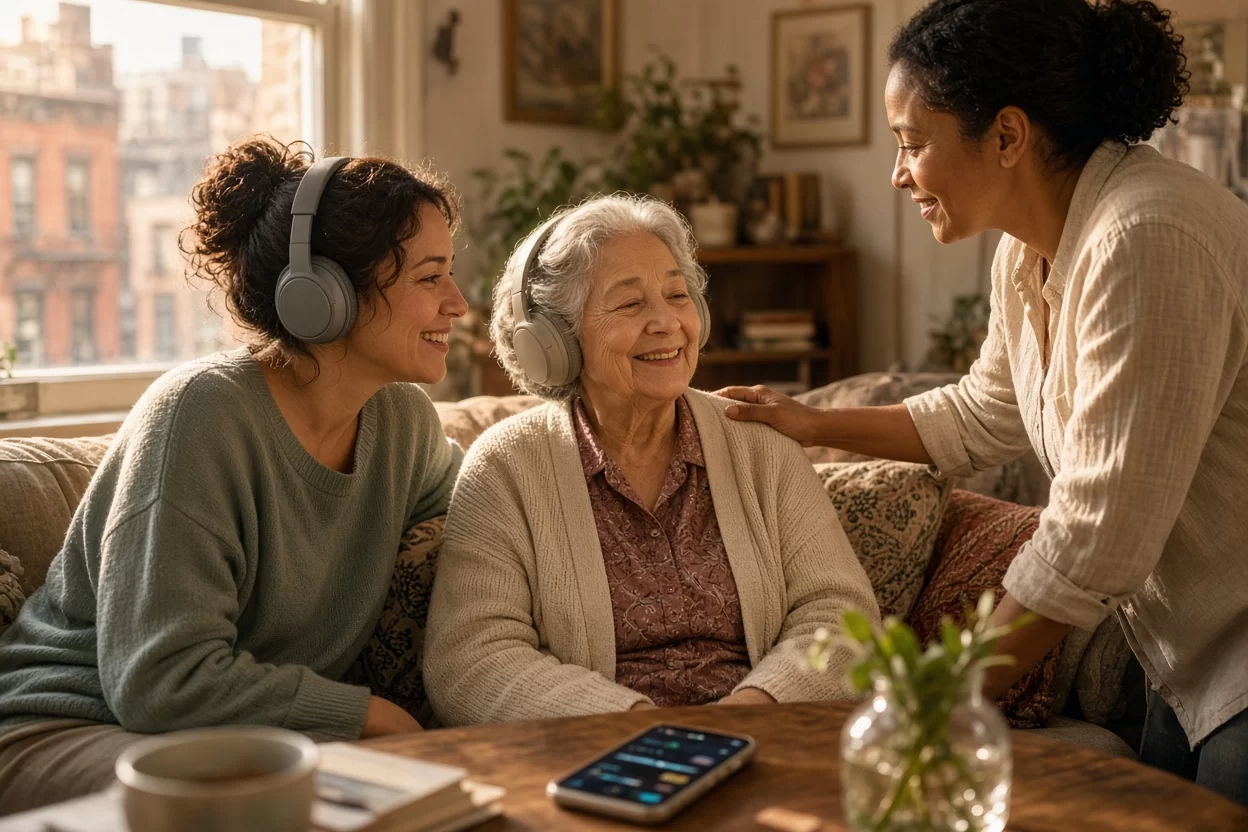
When we think of caring for an aging parent or grandparent, we often focus on medications, safety, and daily routines. But what about the moments that make life feel worth living? Music is one of those rare gifts that can cross every barrier, including the gap between generations. A song from your loved one’s youth can light up their eyes, while a current favorite can spark a lively conversation with a grandchild. At Rockaway Home Care, we have seen how a simple playlist can transform an afternoon from quiet isolation to shared connection. In this article, we will explore why music matters so deeply in senior care and how you can build playlists that bridge the years between you and your loved one.
Why Music Speaks to the Aging Brain
Music is not just entertainment; it is a neurological event. When we hear a familiar melody, our brains release dopamine, the same chemical tied to pleasure and reward. For older adults, especially those with memory challenges, music can access parts of the brain that remain intact even when other functions decline. The rhythm, melody, and lyrics are processed across multiple regions, which is why a person with advanced dementia might still sing along to a song from their twenties.
This is not about making grand claims of a cure. Rather, it is about quality of life. A well-chosen song can reduce agitation, lower anxiety, and create a sense of safety. In home care settings, we often see that a personalized playlist can be more effective than a generic radio station because it speaks directly to the individual’s history. The right song can bring back the smell of a summer dance, the feel of a first love’s hand, or the pride of a first job. These memories are not just nostalgic; they reinforce identity and self-worth.
For family members, understanding this can change how you approach visits. Instead of asking, ‘How are you feeling?’ which might get a shrug, you can play a song and watch the response. The music does the talking. It invites your loved one to share a story or simply to hum along. That shared moment is a bridge, and every bridge you build strengthens your relationship.
How Generational Gaps Affect Music Preferences
Every generation has its own soundtrack, and that is a beautiful thing. Your parent might love Frank Sinatra, while you grew up with Madonna, and your teenager cannot stop playing a current pop hit. These differences can feel like walls, but they are actually doors. When you respect your loved one’s musical history, you honor their life experience. When you introduce a new song, you offer a window into your world.
Generational gaps in music are not just about taste; they are about context. A song from the 1940s might have been played during a war, a wedding, or a first car ride. The emotional weight is tied to those events. Similarly, a song from your own youth carries your memories. When you share both, you are not just playing notes; you are exchanging pieces of your lives. This exchange is vital for seniors who may feel that their stories are no longer relevant.
Practical tip: do not assume that a senior only likes old music. Many older adults enjoy learning about current artists, especially if you present it with enthusiasm. The key is balance. Start with their favorites to build trust, then gently introduce one or two new songs. Ask for their honest opinion. You might be surprised to find that your grandmother has an opinion about a modern pop star, and that conversation is a gift.
Building a Personalized Playlist: Step-by-Step
Creating a playlist is not difficult, but it requires thought and care. The goal is not to compile a random list of songs; it is to craft a journey through your loved one’s life. Begin by asking open-ended questions. What songs did you dance to at your wedding? What did you listen to on the radio during your first job? If your loved one has difficulty communicating, look for clues. Notice which songs make them tap their feet or hum. Ask other family members for suggestions.
Next, choose a platform that is easy to use. Streaming services like Spotify or Apple Music allow you to create custom playlists and even download them for offline listening. If your loved one is not tech-savvy, you can still use a simple MP3 player or a smartphone with a large font. The key is to make the music accessible. Consider the volume and the environment. A quiet room with good speakers or comfortable headphones can make a world of difference.
Organize the playlist into sections. You might have a ‘Morning Wake-Up’ section with upbeat songs, a ‘Memory Lane’ section with favorites from their twenties and thirties, and a ‘Calm Down’ section with gentle melodies for evening. Label each section clearly so that you or a caregiver can easily select the right mood. Remember to update the playlist regularly. As you learn more about your loved one’s preferences, you can add new finds. The playlist is a living document, just like your relationship.
Sample Playlist Structure
- Morning Boost: Songs with a steady beat, like big band or early rock and roll.
- Memory Lane: Tracks from their high school and young adult years.
- Family Favorites: Songs that were played at family gatherings or holidays.
- Gentle Evening: Soft ballads, classical pieces, or nature sounds with music.
Using Music to Connect with Grandchildren and Younger Relatives
One of the most beautiful outcomes of a shared playlist is the connection it fosters between seniors and the youngest family members. Grandchildren often feel awkward visiting a grandparent who is hard of hearing or has memory issues. Music gives them a common language. A grandchild can ask, ‘Grandma, what was your favorite song when you were my age?’ and then play it on their phone. The grandparent can then ask the grandchild to play something they love. This exchange builds mutual respect and curiosity.
You can make this even more interactive. Have a ‘music night’ where each person picks a song and tells a story about why it matters. For a senior, this is a chance to be the storyteller, not just the listener. For a child, it is a chance to see their grandparent as a young person with dreams and adventures. These moments do not require expensive equipment or special skills; they only require intention and a willingness to listen.
If your loved one is in a care setting, encourage staff to incorporate music into their daily routine. Many home care agencies, including Rockaway Home Care, train caregivers to use music as a tool for engagement. You can also create a shared playlist that the caregiver can play during meals or quiet time. This consistency helps the senior feel more at home and gives the caregiver a way to connect beyond tasks.
Overcoming Challenges: When Music Is Not Immediately Welcomed
Sometimes, a senior might not respond to music right away. They might push away headphones or ask for silence. This is not a rejection of you; it is often a sign of overstimulation or a preference for quiet. Start with very low volume and choose a song you know they loved. Play it for just a minute, then pause. Observe their body language. A relaxed jaw or a slower breathing rate are good signs. If they seem distressed, stop and try again another day.
Another challenge is when a senior has hearing loss or uses a hearing aid. Music can sound distorted or even painful. In such cases, use high-quality headphones that are comfortable and have good sound isolation. You can also adjust the equalizer to boost the mid-range frequencies, which are often easier to hear. Do not force it. Sometimes, simply watching a music video with subtitles or reading lyrics together can be just as meaningful.
Finally, be aware of emotional responses. A song can bring up grief or sadness, especially if it is tied to a loss. This is not necessarily bad; it can be a release. Let your loved one express those feelings. Sit with them, hold their hand, and let the music be the container. If the sadness persists or becomes overwhelming, consult a professional, such as a music therapist or a counselor. But in most cases, a good cry can be healing.
Integrating Music into Daily Care Routines
Music should not be reserved for special occasions; it can be woven into the fabric of daily care. For example, play a cheerful song during morning hygiene to make the routine feel less like a chore. Use a calming melody during medication time to reduce anxiety. Have a sing-along after lunch to aid digestion and lift spirits. These small touches can transform a caregiving day from a series of tasks to a series of moments.
If you are a family caregiver, you might feel that you have no time to curate playlists. But you do not need to do it alone. Ask other family members to contribute a few songs each. Use a shared note on your phone to collect ideas. You can also ask your home care aide to play the playlist during their shift. Many aides are happy to do this because it makes their work more enjoyable and the senior more cooperative.
For seniors with dementia, music can be a powerful tool for grounding. When a person becomes confused or agitated, a familiar song from their early adulthood can bring them back to the present. It is not a cure, but it is a comfort. Keep a ‘rescue playlist’ of their top five most beloved songs. Play it when they are restless. You might see them take a deep breath and relax. This is not magic; it is the power of memory and emotion.
Technology Tips for the Non-Tech-Savvy Family
You do not need to be a tech wizard to create a playlist. Start with what you have. If you use a smartphone, open a music app and search for a song. Tap the three dots next to the song and choose ‘Add to Playlist.’ Create a new playlist and give it a name like ‘Mom’s Favorites.’ That is it. You can add more songs later. If you have an older relative who does not use a smartphone, you can burn a CD or use an MP3 player with large buttons.
Another option is to use a smart speaker, like an Amazon Echo or Google Nest, that responds to voice commands. You can say, ‘Play Frank Sinatra,’ and it will start. This is wonderful for seniors who cannot manage a phone but can speak a command. However, be mindful of privacy and set up the device with your loved one’s preferences. Also, ensure that the speaker is placed in a location where the sound is pleasant, not too loud or too soft.
If you are unsure where to start, ask a younger family member for help. This is another opportunity to bridge the generation gap. The teenager in your family can teach you how to use Spotify, and you can teach them about the music of their grandparents. It is a trade that enriches everyone. And if you hit a snag, do not get frustrated. The goal is not perfection; it is connection.
Frequently Asked Questions
How long should a music session be for a senior with dementia?
Short sessions are often best, especially in the beginning. Start with five to ten minutes of music and observe the response. If your loved one is engaged and happy, you can extend it to 15 or 20 minutes. Always watch for signs of fatigue or overstimulation, and end on a positive note by fading the music out gently.
What if my loved one does not like any of the songs I choose?
That is okay. Music preferences are personal. Try to ask them for a song title, even if they cannot hum it. You can also play a variety of genres and watch for subtle cues, like a foot tap or a smile. Sometimes, a song that was popular during a happy time in their life, such as a first date or a graduation, will resonate more than a general classic.
Can music replace medication for anxiety or depression in seniors?
No, music is not a replacement for medical treatment. It is a complementary tool that can support emotional well-being. If your loved one is experiencing severe anxiety or depression, consult a healthcare provider. Music can be part of a comprehensive care plan, but it should never be used as a substitute for professional medical advice.
How can I make a playlist if I do not know their favorite songs?
You can start with songs that were popular during their teenage and young adult years. For someone in their 80s, that might be big band or early rock. For someone in their 60s, it could be Motown or folk. Also, ask other family members or friends. You can also play a few songs and see which ones get a reaction. The process is a discovery, not a test.
Are there any risks to playing music for seniors?
In general, music is safe. However, be aware of volume levels to protect hearing. Also, some songs might trigger strong emotions, including sadness. This is not dangerous, but it can be intense. Always stay present with your loved one during music sessions. If they become very upset, stop the music and offer comfort. If you have concerns, talk to a music therapist who specializes in geriatric care.
A Warm Invitation to Create Your Own Playlist
Building a music playlist for your loved one is a simple act of love that can have profound effects. It does not require special skills or expensive equipment. It only requires your attention and a willingness to listen. Start small. Pick one song that you know they love, play it, and see what happens. Then add another. Before you know it, you will have a collection of songs that tell the story of their life and your shared journey.
At Rockaway Home Care, we believe that care is about more than meeting physical needs; it is about nurturing the spirit. Music is one of the most accessible ways to do that. If you are caring for an aging loved one and would like support, whether it is help with daily routines or simply a listening ear, we are here for you. Reach out to us for a free consultation. Let us work together to create moments of joy and connection, one song at a time.
This article is for general information only and is not medical advice. Always consult with a qualified healthcare professional about your loved one’s specific needs.
More from the Rockaway Home Care blog
- Understanding Medicaid home care eligibility
- Top questions families ask about home care costs
- Choosing between live-in care and hourly home care
- How to create a home care plan for a loved one