
When Your Parent Hides Falls: Getting the Truth Without Losing Trust
Many older adults hide falls out of pride or fear of losing independence. Here is how families can uncover the truth gently while protecting the trust that holds the relationship together.
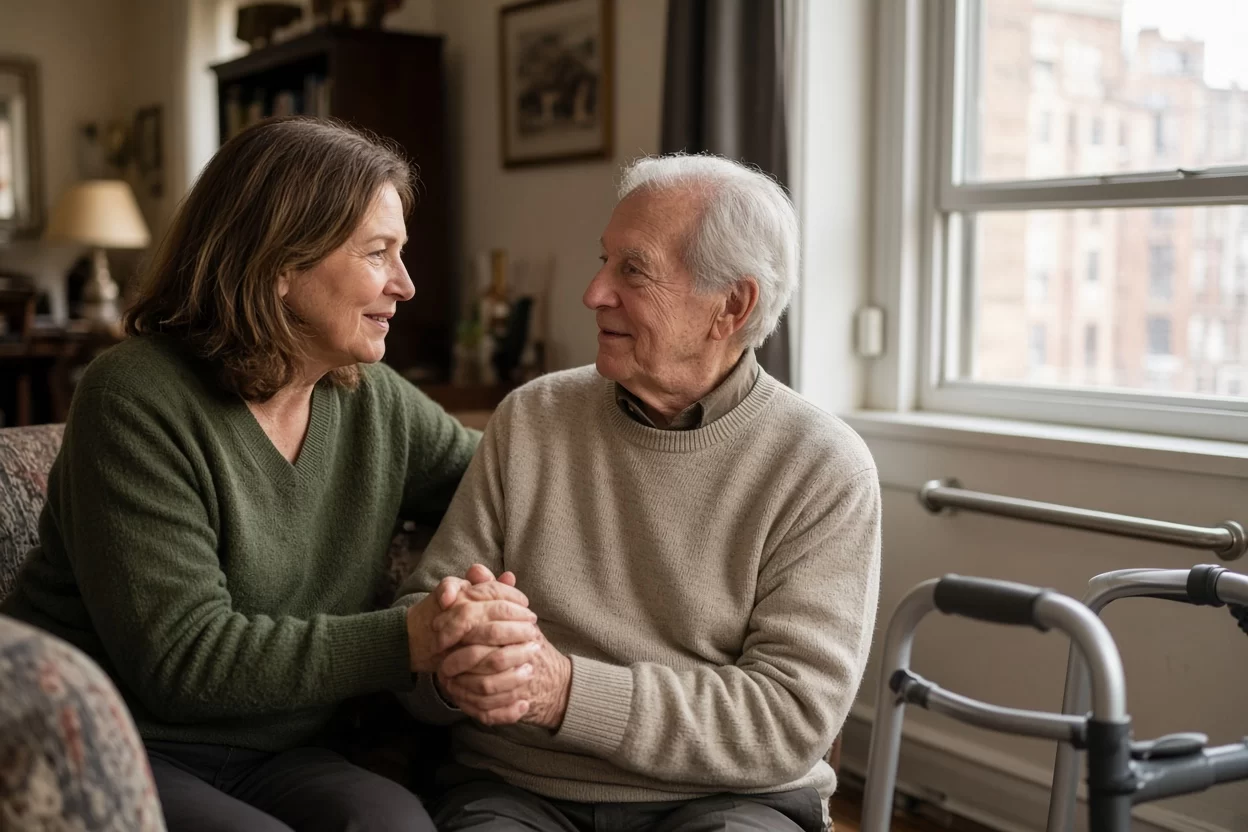
Finding a bruise on your mother’s arm that she cannot quite explain, or noticing that your father moves more carefully than he did a few months ago, can leave you with a knot in your stomach. You want to ask directly, but you also know that the answer may be a quick ‘I am fine’ followed by a closed door. Many older adults hide falls. They are not trying to deceive the people who love them. More often they are protecting something precious: their dignity, their sense of control, and the freedom to keep living in their own home. This article offers a thoughtful way to learn the truth about falls while keeping the trust that makes your relationship work.
Why Older Adults Hide Falls
Understanding the reasons behind secrecy is the first step toward compassionate conversations. For many seniors, a fall carries a heavy emotional meaning. It can feel like proof that they are getting old, that their body is betraying them, or that the independence they worked hard to maintain is slipping away. Pride plays a large role, especially for people who spent decades as providers, professionals, or the strong one in the family. Admitting a fall can feel like admitting defeat.
Fear is just as powerful. Many older adults have heard, directly or indirectly, that a fall often leads to a move out of the house, a loss of driving privileges, or a stay in a facility. They may believe that if they report a fall, family members will take over decisions, restrict their activities, or insist on changes they do not want. So they minimize what happened, get back up quickly before anyone sees, or simply do not mention it.
Embarrassment and memory can also contribute. A person who slipped in the bathroom at night may feel ashamed of needing help getting up. Some seniors genuinely downplay injuries because they do not want to be a burden. Others may have mild cognitive changes that make it hard to recall exactly what happened. Whatever the cause, hidden falls are common enough that families should assume they might be happening, especially when there are subtle signs.
Recognizing the Warning Signs
Because your parent may not volunteer information, you will need to watch for clues. Many falls leave evidence that is easy to miss if you are not looking for it. Bruises in unusual places, such as the hip, back, or upper arm, can signal a fall that was never mentioned. Scrapes on the knees or elbows, a split lip, or a sore wrist that is being favored are all worth noting.
Changes in behavior often tell an even clearer story. Consider whether you notice any of the following:
- Walking more slowly, shuffling, or holding onto furniture while moving through rooms
- Avoiding stairs, or taking them with obvious effort or one step at a time
- New reluctance to go to the bathroom at night or to bathe without help
- Clothing that is stained, torn, or worn in a way that suggests a rough landing
- Items knocked over, rugs bunched up, or furniture moved in ways that suggest a struggle
- Unexplained fatigue, or a sudden increase in sleeping during the day
- Increased anxiety about being alone or about going outside
No single sign proves that a fall occurred, and many of these changes can have other causes, including illness, medication effects, or simple age-related weakness. That is why it helps to look at the pattern over time. If several signs appear together, or if they are getting more frequent, it is reasonable to open a conversation and consider a professional assessment.
Preparing Before You Talk
How you approach the subject matters as much as what you say. Before you bring it up, take a few quiet minutes to clarify your own goals. Are you hoping to learn whether a fall happened so you can prevent the next one? Are you trying to understand how your parent is managing day to day? Being honest with yourself about your intentions will help you speak from care rather than from worry or frustration.
Choose the right setting and timing. A calm moment when you are both relaxed, such as over a cup of tea or during a walk, is far better than a rushed conversation in the middle of a crisis or in front of other family members. Avoid starting the discussion when your parent is tired, in pain, or upset about something else. If possible, talk one-on-one first before involving siblings or others, since a group setting can make a person feel cornered.
It also helps to gather your thoughts about what you have observed, without accusation. Instead of planning to say ‘You fell, I know you did,’ consider how you might describe what you have noticed. Preparation does not mean rehearsing a script. It means knowing the specific things that concern you so that you can speak clearly and kindly.
Starting the Conversation Without Shame
The goal of the first conversation is to open a door, not to win an argument or extract a confession. Begin with warmth and with the reason you care. You might say something like, ‘I love you and I want us to keep you safe and independent for as long as possible. I noticed a bruise on your arm and I wanted to check in. Has anything happened that I should know about?’ This approach names your concern without assigning blame.
Listen more than you speak. If your parent deflects, do not push too hard in that moment. You might say, ‘You do not have to tell me everything today. I just want you to know that if something happens, I want to hear about it, and I will not overreact.’ That last sentence matters a great deal. Many older adults hide falls because they fear the reaction. When they experience a calm, supportive response, they are more likely to share the truth the next time.
Avoid language that suggests they are incompetent or a problem to be solved. Words like ‘you cannot be alone anymore’ or ‘we have to take over’ can trigger defensiveness. Instead, frame the conversation around shared goals: staying safe, keeping the house comfortable, and making sure they have help when they want it. Speak to them as the capable adult they are.
Making the Home Safer Together
Often the most effective way to protect a parent who might be hiding falls is to make their environment safer without making them feel watched. Many fall risks can be reduced with practical, respectful changes. Walking through the home with your parent and asking for their input can help them feel included rather than managed.
Consider the areas where falls most commonly happen. Bathrooms are high on the list, so non-slip mats, grab bars near the toilet and tub, and a shower chair can make a meaningful difference. Good lighting along hallways and between the bedroom and bathroom reduces the risk of nighttime falls. Remove loose throw rugs or secure them firmly, clear walkways of clutter and cords, and make sure frequently used items are stored at comfortable heights so that reaching does not require stretching or climbing.
Footwear and clothing matter too. Supportive shoes with non-slip soles are safer than slippers or socks on hard floors. Some older adults benefit from a personal emergency response system, sometimes called a medical alert pendant, that they can wear at all times. Presenting this as a way to have peace of mind for them and for you, rather than as a sign of decline, often leads to better acceptance.
- Install grab bars and a raised toilet seat or shower chair where needed
- Improve lighting with motion-sensor night lights in hallways and bathrooms
- Remove or secure throw rugs and clear pathways
- Keep phones and emergency numbers within easy reach, not only in another room
- Review the home with a focus on stairs, handrails, and the kitchen
Reviewing Health and Medications
A fall is always worth discussing with a health care provider, even when no serious injury occurred. Falls can be linked to many factors, including changes in vision, blood pressure shifts when standing, balance and strength concerns, side effects from certain medications, and conditions that affect the feet or inner ear. Because these causes can be treated or reduced, a medical evaluation offers real benefit.
Encourage your parent to keep a simple record of any dizziness, near-falls, or falls they experience, including the time of day and what they were doing. Bring this record to appointments. Medication review deserves special attention, since some prescriptions and over-the-counter sleep aids or pain relievers can increase dizziness or drowsiness. A pharmacist or primary care provider can help determine whether adjustments might be appropriate.
Vision and hearing checks are also useful. Outdated eyeglasses or uncorrected vision can make stairs and uneven surfaces much more dangerous. Foot care, including proper footwear and attention to pain or numbness, supports stable walking. Presenting these checks as part of general wellness, rather than as a response to a fall, can make them easier for your parent to accept.
Keeping Trust Intact When Problems Are Found
Sometimes you will learn that a fall happened, possibly one that was hidden for days. The way you respond in that moment will shape whether your parent tells you the truth next time. If you react with anger, panic, or an immediate demand that they move out, you may teach them to hide future incidents. If you respond with calm, gratitude for their honesty, and a focus on next steps, you reinforce openness.
Thank your parent for telling you, even if you wish you had learned sooner. You might say, ‘I am really glad you told me. Let us figure out together what would help.’ Then move to practical planning. Ask what they think caused the fall, whether they were hurt, and what would make them feel safer. Agree on a few concrete changes and a plan for checking in regularly.
Be careful about making sweeping decisions without including your parent. Many families find that the best results come from collaborative planning, where the older adult remains an active decision maker for as long as they are able. Involving a trusted doctor, a geriatric care manager, or a home care professional can bring outside perspective and reduce the sense that family members are simply taking control.
When Extra Support Makes Sense
There may come a point where your parent needs more help than family can provide alone, even with the best intentions. Signs that additional support could be valuable include repeated falls, injuries that require treatment, growing difficulty with bathing, dressing, or getting up from a chair, confusion about medications, or a sense that your parent is isolating themselves to hide their struggles. Recognizing these signs early can help families respond before a crisis.
Home care can be one way to add support while allowing your parent to remain at home. Depending on needs and eligibility in New York, options may include home health aides who assist with personal care and mobility, companion care that provides supervision and encouragement, and programs that help seniors manage daily tasks safely. Many families find that having a trained person present for certain hours reduces the number of hidden falls, because someone is there to notice changes and respond promptly.
Bringing in outside help does not have to feel like a loss of independence. Frame it as a way to protect the things your parent values most. Let them choose, when possible, the type of help and the schedule. Introduce the idea gradually and be open to adjusting the plan as needs change.
Frequently Asked Questions
Why would my parent hide a fall instead of telling me?
Most older adults who hide falls are trying to protect their independence, their pride, or their home. They may fear that telling you will lead to restrictions, a move, or loss of control over their own life. Understanding this motivation can help you respond with reassurance rather than alarm.
What should I do if I find out about a fall that was not reported?
Stay calm and thank your parent for telling you. Check whether they were injured and seek medical attention if there is any head injury, severe pain, confusion, or inability to bear weight. Then work together on understanding the cause and making practical changes at home.
Is it a good idea to install cameras or monitoring devices without telling my parent?
Secretly monitoring a parent can damage trust and may raise serious privacy and legal concerns. It is generally better to discuss monitoring openly and, when possible, let your parent agree to any devices. Transparent options, such as a wearable alert pendant, are usually more respectful and more effective over time.
How can I tell if my parent needs more help than they are admitting?
Look for patterns rather than single incidents, such as frequent bruises, slower walking, difficulty with bathing or stairs, unpaid bills piling up, spoiled food, or unusual isolation. A medical evaluation or a conversation with a geriatric care professional can help clarify what level of support would be appropriate.
Can a home care aide help prevent falls if my parent resists having help?
Many seniors who initially resist home care come to appreciate the companionship, the extra safety, and the chance to stay in their own home. Starting with a limited schedule, letting your parent choose their aide when possible, and emphasizing their independence can ease the transition. A caregiver who builds a respectful relationship can also be a good source of information about changes in your parent’s daily life.
If you are worried about a parent who may be hiding falls, you do not have to figure out the next steps alone. Rockaway Home Care is glad to talk with families about their situation, explain the kinds of support that are available in New York, and help you think through options that respect your loved one’s dignity. We would be happy to offer a free consultation whenever you feel ready to talk.
note that this is general information, not medical advice
More from the Rockaway Home Care blog
- Understanding Medicaid home care eligibility
- Top questions families ask about home care costs
- Choosing between live-in care and hourly home care
- How to create a home care plan for a loved one