
When Your Parent Keeps Turning Off the Smoke Alarm
If your aging parent keeps turning off the smoke alarm, it is a sign that something needs attention. Understanding the reasons behind it helps families respond with patience and practical safety solutions.
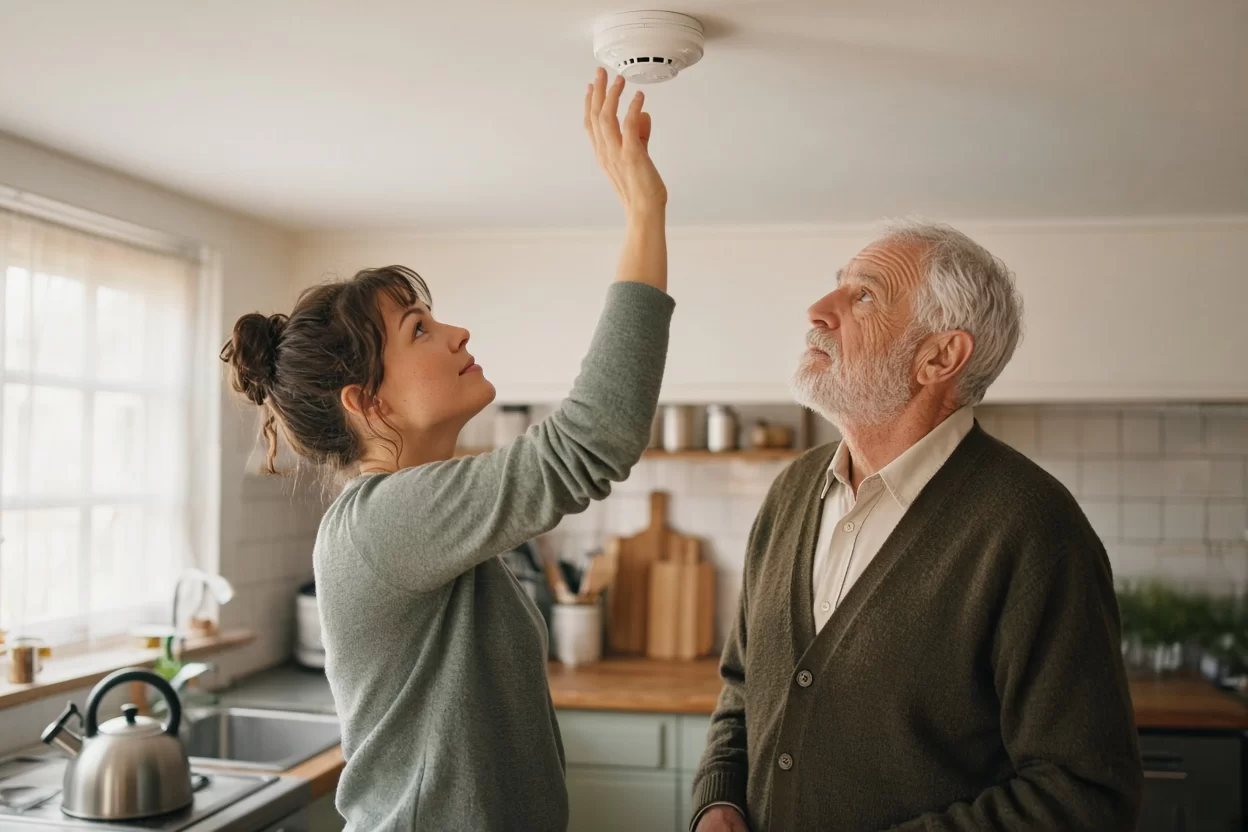
Few things are more unsettling than hearing a smoke alarm chirp or shriek, only to find that your mother or father has pulled the battery or removed the unit altogether. Maybe the alarm went off because of burnt toast, and your parent was frustrated by the noise. Maybe it happened several times, and each time the explanation seemed a little less convincing. Whatever the case, when an aging parent keeps turning off the smoke alarm, it is a signal worth taking seriously. The behavior is often rooted in something understandable, such as irritation, confusion, or a change in how the senses and memory are working. It is also a real safety concern, because a smoke alarm that is silenced cannot warn anyone of a fire. This article explores why this happens, what the risks are, and how families can respond with compassion and practical steps that protect everyone in the home.
Why Older Adults Turn Off Smoke Alarms
The first step in addressing this problem is understanding that the behavior usually has a reason behind it, even if that reason is not obvious at first glance. Many older adults disable smoke alarms simply because the noise is irritating, especially when it sounds during cooking or showering and there was no real fire. A parent who is hard of hearing may not realize how loud the alarm is to others in the home, or may be bothered by the sharp, high-pitched tone. Others may be sensitive to the sound in ways that cause anxiety or distress, and turning the alarm off becomes a way to restore calm.
In some cases, the alarm is being silenced because it has been going off frequently for reasons that seem unnecessary. Steam from the bathroom, smoke from a slightly scorched pan, or dust settling on the sensor can all trigger a false alarm. When a parent experiences this repeatedly, they may decide the device is simply broken or a nuisance, and remove the battery without thinking through the consequences. Practical frustration of this kind is far more common than most families realize.
Cognitive changes also play a significant role. A parent experiencing memory loss, confusion, or early dementia may not remember why the alarm matters, may forget that they already silenced it, or may misinterpret the sound entirely. They might think the beeping is a phone, a microwave, or a malfunction. Some people with cognitive decline become agitated by unexpected noises and react by reaching for the nearest off switch. Recognizing these patterns helps families respond to the behavior rather than simply reacting to it.
Common triggers to watch for
- Frequent nuisance alarms from cooking, steam, or dust
- Low battery chirping at night that disrupts sleep
- Hearing changes that make the sound feel either too loud or confusing
- Confusion about what the alarm means or what to do when it sounds
- Anxiety or agitation triggered by sudden loud noises
The Real Safety Risks Behind Disabled Alarms
It can be tempting to view a disabled smoke alarm as a minor household inconvenience, but the risks are serious. Fires in the home can spread quickly, and smoke can be dangerous long before flames are visible. Smoke inhalation can cause disorientation and make it harder to escape, which is especially dangerous for an older adult who may already have limited mobility or slower reaction times. A working alarm provides the early warning that can make the difference between a quick escape and a tragedy.
Older adults face unique vulnerabilities in a fire. Reduced mobility may make it harder to get out of bed, navigate stairs, or reach an exit. Hearing or vision changes can make it harder to notice danger. Some medications can cause drowsiness that makes waking up more difficult. Because of these factors, the early alert that a smoke alarm provides is especially valuable for seniors, and removing it significantly increases their risk.
There are also risks that come from cooking when alarms are silenced or ignored. A parent who has learned to tune out the alarm may leave a stove unattended, or a pan may overheat without anyone noticing. Space heaters, candles, and electrical problems all carry fire risk, and a silenced alarm offers no protection against any of them. Families should understand that the danger is not theoretical, and that even a single incident can be devastating.
Start With a Calm, Non-Judgmental Conversation
When a family discovers that a parent has been turning off the smoke alarm, the first instinct may be to confront them, express frustration, or insist they stop immediately. While the concern behind that reaction is valid, a harsh approach often leads to defensiveness, secrecy, or even more disabling of safety devices. A calmer conversation is much more likely to produce real change. Choose a quiet moment when both of you are relaxed, rather than right after an alarm has just gone off and tempers are high.
Begin by listening. Ask your parent what the alarm sounds like to them, when it tends to go off, and what bothers them most about it. Their answers will reveal a great deal, whether the issue is noise, false alarms, confusion, or something else entirely. Acknowledge their feelings without agreeing that the behavior is acceptable. For example, you might say, ‘I can see how loud and annoying that beeping is, and I understand why you want it to stop. I also want us to find a way that keeps you safe and also makes the house more peaceful.’
Try to frame the conversation around shared goals rather than rules. Most parents want to remain independent, safe, and comfortable in their own home. Emphasizing that you want to protect them, and that you are looking for solutions together, tends to feel far less controlling than giving orders. If your parent becomes upset, it is perfectly fine to pause and return to the topic later. The goal is ongoing collaboration, not a single decisive argument.
Helpful phrases to try
- ‘Help me understand what the alarm does that bothers you the most.’
- ‘I want you to be safe, and I want to find something that works for both of us.’
- ‘Let us look at why it keeps going off and see if we can fix the cause.’
Practical Solutions That Address the Root Cause
Once you understand why the alarm is being silenced, you can often solve the problem directly. If false alarms are the trigger, the cause is frequently fixable. Alarms placed too close to a kitchen or bathroom are prone to nuisance activation from steam and cooking fumes, so relocating a unit farther from these areas, within the recommended guidance for placement, may dramatically reduce false alarms. Cleaning dust from the sensor with a gentle vacuum attachment can also help. Replacing an old unit is worthwhile, since older alarms become less reliable over time.
Consider upgrading to a different type of detector. Some alarms are designed to reduce nuisance activation, and some models use different sensing technology that responds better to cooking or steam. Interconnected alarms, where one unit sounding triggers all of them, can also help ensure that the warning reaches a parent who may be in a different room or who has diminished hearing. Your local fire department or a qualified electrician may be able to offer guidance on suitable options for your home.
For parents with hearing loss, specialized alarms are available that use strobe lights or vibrating devices, such as a bed shaker, in addition to a loud siren. These can ensure the warning is noticed even when a traditional audible alarm would be missed. Some families also find that a monitored system connected to a family member or monitoring service provides an extra layer of reassurance. Look for options that match your parent’s specific needs and that are easy for them to understand and use.
Fixes families often find helpful
- Relocating the alarm away from kitchens and bathrooms, while following placement guidance
- Cleaning dust from the unit on a regular schedule
- Replacing outdated alarms, especially those older than the manufacturer’s recommended lifespan
- Installing interconnected alarms so the warning is heard throughout the home
- Adding strobe or vibrating alerts for a parent with hearing loss
When Memory or Cognitive Changes Are Involved
If you suspect your parent’s behavior is connected to memory loss, confusion, or dementia, the approach needs to shift. Arguing with someone who has cognitive decline rarely works, and they may not be able to retain instructions about the alarm even after a clear explanation. Instead, focus on simplifying the environment and reducing the chance of harmful situations. Consider a gentle reminder system, labels or visual cues near the alarm, or a routine that helps your parent understand what the sound means.
It is also worth discussing the situation with your parent’s healthcare provider. Changes in judgment, memory, or behavior can have many causes, some of which are treatable, and a medical evaluation can help clarify what is going on. A clinician can also offer guidance on how cognitive changes affect safety at home. This is general information rather than medical advice, and only a qualified professional can assess an individual’s condition.
Families may find that a structured daily routine helps reduce confusion and agitation, which in turn can lessen the impulse to silence alarms out of stress. Keeping consistent schedules for meals, rest, and activity, reducing clutter, and maintaining good lighting can all contribute to a calmer, safer environment. Some people with memory changes also respond well to visual reminders placed near the stove or the alarm, such as a simple note that reads, ‘If the alarm sounds, leave the kitchen and call for help.’
Building a Safety Plan Together
A single fix rarely covers every risk, so it helps to create a broader home fire safety plan. This plan should include working smoke alarms on every level and inside or near sleeping areas, a clear escape route from each room, and a designated meeting place outside the home. Regular fire drills, even simple ones, can help your parent remember what to do. Practicing the sound of the alarm and what to do when it goes off can also build familiarity and reduce the impulse to silence it in panic or annoyance.
Consider other fire-safety measures that reduce risk. Keep a fire extinguisher in an accessible location and make sure your parent knows how to use it. Store flammable items away from heat sources, avoid overloaded electrical outlets, and inspect cords regularly. Make sure the stove is never left unattended while cooking, and consider automatic shut-off devices for appliances. Each step adds protection even when alarms are inconvenient.
Involve your parent in building the plan whenever possible. People are more likely to follow safety measures they helped create. Let them choose where to keep a flashlight, where to place reminder notes, or how they would like to be contacted in an emergency. Respecting their input supports dignity while still keeping the home protected.
Elements of a home fire safety plan
- Working alarms on every level and near sleeping areas, tested monthly
- Batteries replaced on a regular schedule, or sealed long-life units checked as recommended
- Two ways out of each room where possible, with clear paths free of obstacles
- An outside meeting place and a plan for calling for help
- Periodic practice so the family knows what to do when the alarm sounds
When Extra Support at Home May Help
Sometimes the challenge of keeping an aging parent safe goes beyond what one family member can manage alone. Work schedules, distance, and the physical demands of caregiving can make it difficult to check on a parent every day or to respond quickly if something goes wrong. In these situations, professional support can provide a valuable layer of safety and peace of mind. Home health aides and personal care aides can help with daily routines, medication reminders, meal preparation, and general observation of the home environment, while also offering companionship.
A caregiver who visits regularly can notice early warning signs, such as a silenced alarm, a forgotten stove burner, or a change in the home that suggests a problem. They can also reinforce safety habits your parent has agreed to, help with testing alarms and replacing batteries, and support the family in creating a consistent routine. Over time, this consistency often reduces the frustration and confusion that lead to unsafe behaviors in the first place.
Many families also benefit from talking openly with the care team about the situation. Sharing what you have observed, what your parent has said, and what solutions you have tried helps caregivers respond more effectively. A coordinated approach that includes the family, the aging parent, and trained support often works better than any single strategy on its own.
Taking Care of the Caregiver, Too
Watching a parent put themselves at risk can be deeply stressful. Many adult children feel guilt, fear, anger, and exhaustion all at once, sometimes within the same hour. It is normal to feel overwhelmed by the responsibility of protecting someone you love while also respecting their independence. Give yourself permission to ask for help, to set realistic expectations, and to acknowledge that you cannot control every risk. Your wellbeing matters too, and a rested, supported caregiver is better able to make thoughtful decisions.
Consider connecting with other families who are facing similar challenges. Support groups, community organizations, and online forums can offer perspective and practical ideas. Hearing how others have handled a parent who silences alarms, refuses help, or resists change can be a relief. You might discover approaches you had not considered, or simply feel less alone in a difficult season.
Remember that progress often comes in small steps. You may not solve every concern in one conversation or one week. Celebrate the moments when your parent agrees to test the alarm with you, accepts a new device, or simply talks openly about their worries. These steps build trust, and trust is the foundation for keeping your parent safe over the long run.
Frequently Asked Questions
Why does my parent keep turning off the smoke alarm even after I explain the danger?
Explanations alone often do not change behavior, especially when a parent is frustrated by false alarms or experiencing memory changes. Their reasons may be emotional or cognitive rather than logical. Focusing on the underlying cause, such as relocating the alarm or upgrading to a model that reduces nuisance triggers, is usually more effective than repeating warnings.
Is it safe to simply remove the battery from a noisy alarm?
No, removing the battery leaves the home without any warning of a fire, and that is a serious risk. Instead, address the cause of the noise, such as cleaning dust, moving the unit away from cooking or steam, or replacing an old alarm. A qualified professional can help identify a safer solution.
What type of alarm works best for a parent with hearing loss?
Alarms with strobe lights or vibrating accessories, such as bed shakers, can help ensure a warning is noticed even when the audible siren is missed. Interconnected systems can also spread the alert throughout the home. Your local fire department or a qualified installer can recommend models suitable for your situation.
How can I tell if my parent’s behavior is caused by memory loss or something else?
Changes in memory, judgment, or behavior can have many causes, and only a healthcare provider can determine what is going on. If you notice new confusion, repeated forgetfulness, or unusual agitation, it is worth scheduling a medical evaluation. Early assessment can identify treatable conditions and help guide safety planning.
What if my parent refuses all help and insists on keeping alarms off?
This can be very difficult, and it is important to stay calm and keep the conversation open. Try to understand the reasons behind the refusal, involve your parent in choosing solutions, and consider bringing in a trusted healthcare provider or professional caregiver who may be able to build rapport. If the safety risk is serious, your family may need to explore additional supports together.
If you are concerned about your parent’s safety at home and would like to talk through your options, the team at Rockaway Home Care is glad to offer a free consultation. We can listen to your situation, answer your questions, and discuss how trained home care support might fit into your family’s plan. You do not have to face these decisions alone, and reaching out is a meaningful first step toward a safer, calmer home for everyone.
Please note that this article is general information and not medical advice. Always consult a qualified healthcare provider or fire safety professional about your parent’s specific needs and your home’s safety requirements.
More from the Rockaway Home Care blog
- Understanding Medicaid home care eligibility
- Top questions families ask about home care costs
- Choosing between live-in care and hourly home care
- How to create a home care plan for a loved one