
Your Parent's Smartphone Photos: Protecting Privacy When Aides Visit
Smartphones make it easy to snap a quick photo, but a parent's home is their private space. Here is how families can set clear, respectful photo boundaries with home care aides.
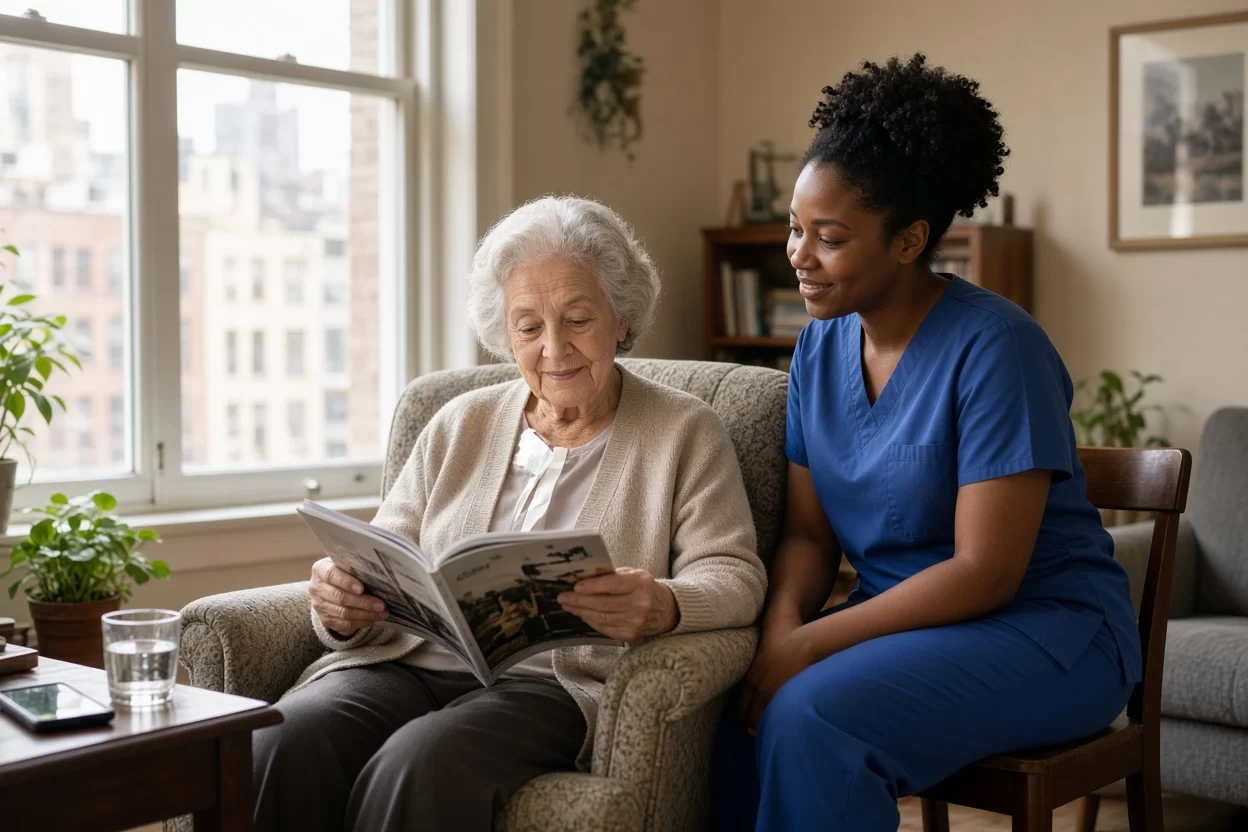
When a parent needs help at home, bringing a caregiver into their daily life can feel like a big step for the whole family. Many families find comfort in knowing that someone is checking in, helping with bathing, meals, medication reminders, or simply keeping the apartment safe. Yet a common and often overlooked question comes up quickly: what about photos? Smartphones are everywhere, and it is easy for a well-meaning aide to snap a picture of a sore spot, a medication bottle, a spill, or a sweet moment with a grandchild. Those images can be useful, but they can also reveal intimate details of your parent’s body, home, and life. This guide walks through why photo privacy matters, how to set clear expectations, and how to build a relationship of trust that protects your parent’s dignity while still giving everyone the information they need.
Why Photos Deserve Careful Thought
A photograph is not just an image. Once it leaves the phone, it can be copied, forwarded, stored in a cloud account, or shared on social media in ways no one intended. For an older adult, a picture taken during personal care may reveal a body that they feel deeply private about, or show a bedroom and personal belongings that they consider their own sanctuary. Even innocent photos can carry details, such as street views, mail with addresses, or a daily schedule visible on a calendar, that could make a parent more vulnerable to scams or unwanted visitors.
There is also a matter of dignity. Many older adults have spent decades being in control of their own lives, and receiving help can already stir feelings of loss or embarrassment. Being photographed without being asked can deepen that feeling, even if the intent was kind. Thinking about photos from your parent’s point of view, rather than only from the family’s point of view, is often the first step toward finding the right balance.
Privacy also matters for the aide. A clear, written photo policy protects caregivers from misunderstandings. If an aide is accused later of taking an inappropriate picture, a documented policy that everyone agreed to makes it far easier to resolve the situation fairly. Good boundaries protect everyone in the home.
Start With a Conversation Before the First Visit
The best time to talk about photos is before the first shift begins. Sit down with your parent, and if appropriate, include the agency coordinator or the aide who will be working with them. Explain in plain language what kinds of photos, if any, are needed and why. For example, a family member living out of state might want an occasional picture of a newly installed grab bar to confirm the safety work is done. That is a very different purpose from photographing a parent while they are bathing or dressing.
Let your parent have a real voice in this conversation. Ask questions like: Would you feel comfortable being in a photo at all? Are there parts of the apartment you would rather not have pictured? Would you like to approve any images before they are sent to family? Many older adults are relieved to be asked, and their answers will guide the rules that follow. Write down the agreed-upon decisions so there is no confusion later.
Create a Simple Written Photo Policy
A short written policy can prevent most problems. It does not need to be long or legalistic. A one-page document that covers the essentials is usually enough. Consider including the following points:
- Purpose: State the specific reasons photos might be taken, such as documenting an injury, recording a medication label, or showing a home safety concern.
- Off-limits situations: Clearly state that no photos are taken during personal care, toileting, bathing, or dressing unless there is a documented medical need and the parent has agreed.
- Consent: Require that the parent, or their legal decision-maker if they lack capacity, agrees to each category of photo in advance.
- Sharing: Specify who may receive photos, how they will be sent, and that photos must not be posted on social media or shared with anyone outside the care team.
- Deletion: State that photos should be deleted from the aide’s personal device once they have been shared for the stated purpose.
- Reporting: Explain how a concern about a photo, or about any privacy issue, can be raised with the agency.
Review the policy together and have the parent sign or acknowledge it, along with the aide and a family representative. Keep a copy in an accessible place in the home, such as a folder near the care plan.
Set Boundaries Around Personal Care
Personal care is the area where photo privacy matters most. Bathing, toileting, incontinence care, and dressing involve the most vulnerable moments in a person’s day. As a general rule, there is no good reason for a photograph to be taken during these tasks. If a skin concern, wound, or injury needs to be documented for a clinician, the safer approach is to agree on a specific protocol: the parent gives consent, the photo is taken only of the affected area, the aide uses a device the agency has approved if one is available, and the image is shared only with the designated nurse or doctor.
Families sometimes ask whether an aide can photograph a bruise or wound to show a doctor. In many situations a better step is to call the agency nurse or the parent’s physician, describe what you see, and let the clinical team decide what documentation is needed. This keeps photos to a minimum while still getting the medical attention that is required. Always report any new injury promptly, whether or not a photo is taken.
Think About the Home as a Private Space
Photos of rooms and belongings can seem harmless, but they reveal far more than many people expect. A picture of a kitchen counter can show prescription bottles with names and dosages. A bedroom photo can reveal jewelry, cash, or valuable items. A window view can give away the neighborhood and the times when the home is empty. Families often do not realize how much information is visible in the background of a single image.
Consider asking the aide to photograph only what is needed for the stated purpose. If a family member wants to see whether a hallway has been cleared of clutter for safety, the photo can be taken from a distance and crop out personal items. If medication organization needs to be checked, the photo can show the pill organizer without showing unrelated labels or documents. A little thought about framing protects privacy while still meeting the goal.
Protect Devices, Accounts, and Stored Images
Where photos are stored matters as much as how they are taken. Many smartphones automatically back up images to a cloud account, sometimes without the user realizing it. An aide’s personal phone may sync photos to a personal account that the agency and the family have no control over. For this reason, many agencies prefer that any necessary care photos be taken on a device the agency provides, or that aides be instructed to disable automatic cloud backup for work-related images.
Ask the agency how it handles photos and data. Good questions include: Does the agency provide work devices? Are care photos stored on a secure system rather than on personal phones? How long are photos kept, and who can access them? How are photos deleted when they are no longer needed? Families have a right to clear answers to these questions, and a reputable agency will welcome them.
- Ask whether photos will be sent by secure messaging rather than by standard text or personal email.
- Request that photos be deleted from the aide’s device after they have been shared for the stated purpose.
- Confirm that no photos will be posted on social media, group chats, or public forums.
- Check that family members who receive photos also keep them private and do not forward them.
Build Trust Through Consistent Communication
Privacy is not only about rules. It is also about the relationship between your parent, the aide, and the family. When an aide is open about what they are doing and why, trust grows. A good aide will say, before taking any photo, what it is for and will ask permission in the moment. They will also tell you if something unusual has happened, rather than hoping no one notices.
Families can support this by checking in regularly. A brief weekly call with the aide or coordinator, a shared care log, or a notebook kept in the home can keep communication flowing. If a family member has a question about a photo that was shared, they should feel comfortable asking. Likewise, if your parent seems uncomfortable with an image or a practice, encourage them to speak up. Many older adults are reluctant to complain, so it helps to ask directly, for example: Is there anything about how we are taking care of you that makes you uneasy?
Signs Something May Need Attention
Pay attention if a parent becomes anxious when a phone is brought out, if they ask that photos be deleted, or if you learn of pictures that were taken without anyone’s knowledge. Other warning signs include an aide who resists explaining their device practices, pressure to share images outside the agreed channels, or photos that show a parent in a state of undress or distress. Any concern of this kind should be raised with the agency promptly. If you believe a parent is being exploited or harmed, contact the agency’s supervisor and, where appropriate, the appropriate authorities.
Frequently Asked Questions
Is it ever okay for a home aide to take a photo of my parent?
Yes, in some situations, such as documenting a wound for a clinician or recording a home safety hazard. The key is that the purpose is specific, your parent has consented, the photo is limited to what is needed, and it is shared only with the appropriate care team. Photos should never be taken during personal care without a clear medical reason and agreement.
What if my parent has memory problems and cannot give consent?
If your parent has cognitive changes, involve their legal decision-maker, such as a health care proxy or guardian where applicable, and still ask your parent in a gentle, simple way whether they are comfortable. Document the decisions made and revisit them as your parent’s needs change. Respecting their dignity remains important even when they cannot fully participate in the decision.
Should I ask the agency to use only company devices?
Many families find this to be a helpful safeguard. Agency-provided devices are often managed under the agency’s privacy and data policies, which can make it easier to control storage, sharing, and deletion. Ask the agency what devices are used and how images are handled before the first shift.
What should I do if I find a photo that was shared without permission?
Stay calm, document what you found, and contact the agency supervisor right away. Ask for an explanation and clear steps to correct the problem, including deleting the image and confirming that it is not stored or shared elsewhere. If the situation feels serious or you are not satisfied with the response, you may wish to seek guidance from a trusted advisor or the appropriate oversight body.
How can I tell whether an agency takes photo privacy seriously?
Look for a written policy, clear answers about devices and data storage, and a willingness to discuss your parent’s preferences. A reputable agency will welcome these questions and will include your parent in decisions about their care. If an agency seems dismissive or vague about privacy, that is worth noting as you make your choice.
A Caring Next Step
Protecting your parent’s privacy is one of the many ways you can honor their dignity while they receive help at home. Clear conversations, a simple written policy, careful framing of any photos, and steady communication can make a real difference in how safe and respected your parent feels. If you are considering home care for a loved one in the New York area, or you have questions about how to set up these boundaries with an aide, our team at Rockaway Home Care would be glad to talk with you. We offer a free consultation where we can listen to your family’s needs, explain our privacy practices, and help you decide what kind of support fits best. Reaching out is a meaningful step, and you do not have to figure out every detail on your own.
note that this is general information, not medical advice
More from the Rockaway Home Care blog
- Understanding Medicaid home care eligibility
- Top questions families ask about home care costs
- Choosing between live-in care and hourly home care
- How to create a home care plan for a loved one