Senior Food Texture Preferences: Pureed vs. Chopped
Choosing the right food texture for an aging loved one can be challenging. This guide explains pureed vs. chopped options, when each is appropriate, and how to make meals safe, nutritious, and enjoyable.
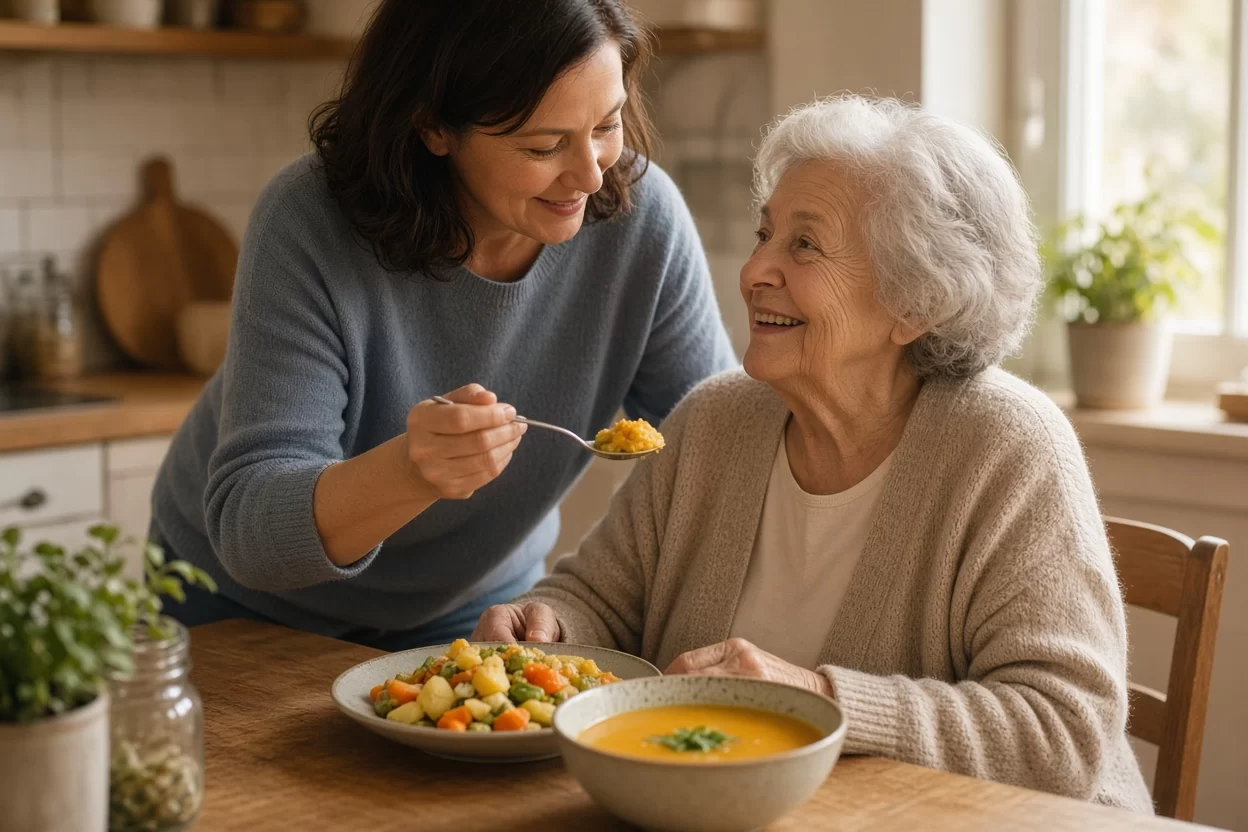
When you care for an aging parent or grandparent, mealtimes can become a delicate balancing act. You want them to enjoy their food, stay nourished, and remain safe, but sometimes swallowing becomes harder or chewing becomes tiring. You might have heard terms like ‘pureed’ or ‘chopped’ from a doctor or speech therapist, but what do they really mean for your loved one’s daily meals? This guide will walk you through the differences between pureed and chopped foods, when each texture is appropriate, and how to make the transition smoother for everyone involved.
Understanding Why Texture Matters for Seniors
As we age, our bodies change in ways that affect how we eat. Teeth may become sensitive or missing, dentures might not fit as well, and the muscles used for chewing and swallowing can weaken over time. For some seniors, neurological conditions like Parkinson’s disease or dementia can also impact coordination and the ability to swallow safely. When chewing or swallowing becomes difficult, the risk of choking or aspirating (food or liquid entering the airway) increases significantly.
Texture modification is not about taking away pleasure from food. It is about adapting meals to match a person’s current abilities while still providing the nutrients they need. A pureed or chopped diet can help prevent choking, reduce mealtime anxiety, and allow a senior to eat independently for longer. The goal is always to maintain dignity and enjoyment, not to make food feel like a punishment.
It is important to note that texture needs are highly individual. What works for one person may not work for another. A speech-language pathologist or a dietitian can provide specific recommendations based on a senior’s swallowing assessment. However, understanding the basic categories of pureed and chopped foods gives you a solid foundation to start conversations with healthcare providers and to make informed choices at home.
What Is a Pureed Diet?
A pureed diet consists of foods that have been blended, strained, or mashed until they have a smooth, pudding-like consistency. There should be no lumps, chunks, or pieces that require chewing. Pureed foods are often recommended for seniors who have severe difficulty chewing, significant swallowing problems (dysphagia), or who are recovering from oral surgery or stroke. The texture is uniform, which makes it easier to control in the mouth and swallow safely.
Common examples of pureed foods include blended soups, smooth mashed potatoes, pureed vegetables like carrots or squash, and fruit purees like applesauce or pear sauce. Meats can also be pureed, often with broth or gravy to achieve a smooth consistency. Many commercial products offer pre-made pureed meals, but making them at home can be more cost-effective and allows you to control ingredients and flavors.
One of the biggest challenges with a pureed diet is that it can look unappealing if not presented carefully. A plate of beige mush does not stimulate appetite. However, with a little creativity, you can make pureed meals look and taste delicious. Use cookie cutters to shape mashed vegetables into fun forms, serve pureed meats in a hollowed-out tomato or pepper, or drizzle a vibrant sauce over the top. Remember, we eat with our eyes first, and this is just as true for seniors as for anyone else.
When Is a Pureed Diet Recommended?
- After a stroke or brain injury that affects swallowing muscles.
- For advanced dementia where the person forgets how to chew or manage solid foods.
- For severe dental issues or ill-fitting dentures that make chewing painful.
- For conditions like ALS, multiple sclerosis, or Parkinson’s disease in later stages.
- During recovery from head or neck surgery or radiation therapy.
What Is a Chopped Diet?
A chopped diet involves cutting food into small, bite-sized pieces that are easy to chew and swallow. The pieces are typically about half an inch or smaller, depending on the person’s needs. Chopped foods are less restrictive than pureed options and are often recommended for seniors who can chew but have some difficulty, such as those with mild swallowing issues, poor dentition, or reduced stamina for chewing long meals.
Chopped diets allow for more variety and texture than pureed meals. For example, a chopped meal might include diced roasted chicken, finely chopped green beans, and small cubes of soft sweet potato. The key is that all pieces are small enough to be safely managed without excessive chewing. Unlike a pureed diet, chopped foods retain some of their natural shape and texture, which can make meals more satisfying and visually appealing.
It is crucial to remember that ‘chopped’ does not mean ‘hard.’ Even in a chopped diet, foods should be soft enough to be easily mashed with a fork. Hard foods like raw apples or nuts should be avoided or prepared differently, such as by steaming or grating. The goal is to reduce the effort required to eat while still providing a variety of nutrients and flavors.
Who Might Benefit from a Chopped Diet?
- Seniors who tire easily while chewing but do not have severe swallowing issues.
- Individuals with poorly fitting dentures or a few missing teeth.
- Those with early-stage dementia who can still chew but need smaller pieces to avoid confusion.
- People with mild dysphagia who can manage soft, small pieces with careful eating.
- Seniors who refuse pureed foods because they find them unappetizing.
Key Differences Between Pureed and Chopped
The main difference lies in the level of chewing required. Pureed foods require no chewing at all, while chopped foods require minimal chewing. This distinction is critical for safety. If a senior has a severe swallowing disorder, even small chopped pieces can be dangerous because they may not be broken down enough to swallow safely. On the other hand, if a senior can chew but just needs smaller pieces, a pureed diet may be unnecessarily restrictive and could lead to decreased enjoyment and even nutritional deficiency.
Another difference is the preparation method. Pureed foods are typically blended or processed into a smooth paste, often with the addition of liquid like broth, milk, or juice to achieve the right consistency. Chopped foods are simply cut into small pieces using a knife, food processor, or kitchen scissors. The cooking method may also differ: pureed foods are often cooked longer to soften them fully, while chopped foods can be cooked to a tender but still intact state.
Nutritionally, both diets can be balanced, but pureed diets may require more attention to ensure adequate calorie and protein intake, as blending can sometimes dilute nutrients or make portions seem larger than they are. Chopped diets are closer to regular meals and may be easier to keep nutritionally dense. However, both can be healthy if planned well. It is always a good idea to work with a dietitian to ensure your loved one is getting enough protein, vitamins, and calories.
How to Transition from Regular Foods to Pureed or Chopped
Transitioning a senior to a new food texture can be met with resistance, especially if they are used to eating solid foods. The key is to go slowly and involve them in the process as much as possible. Start by introducing one or two pureed or chopped items alongside their regular meals, so they can get used to the new texture without feeling like they are losing everything at once.
For a chopped diet, you can begin by cutting foods into slightly smaller pieces than usual, then gradually reduce the size over a few days or weeks. For a pureed diet, you might start with food that is mashed but still slightly chunky, then progress to a smoother consistency. Always observe how your loved one reacts and whether they are able to eat without coughing or discomfort. If you notice any signs of choking, coughing, or difficulty breathing, stop and consult a healthcare professional immediately.
Involving the senior in meal planning can also help. Ask them what foods they enjoy and try to adapt those favorites into the new texture. If your mother loves chicken soup, puree the vegetables and chicken into a smooth broth, or chop everything finely and serve it with soft bread. The more familiar the food looks and tastes, the more likely they are to accept it.
Practical Tips for Preparing Pureed Meals
- Use a high-quality blender or food processor to achieve a smooth texture.
- Add liquid in small amounts (broth, milk, or water) until you reach a pudding-like consistency.
- Season generously, as blending can dull flavors. Use herbs, spices, and a little salt or butter.
- Serve pureed foods at the right temperature; very hot or cold can be uncomfortable.
- Make extra and freeze in ice cube trays for easy portioning later.
Practical Tips for Preparing Chopped Meals
- Cut food into uniform pieces, about the size of a pea or smaller, depending on ability.
- Choose soft foods like cooked vegetables, tender meats, and ripe fruits.
- Moisten foods with gravy, sauce, or broth to make swallowing easier.
- Avoid sticky foods like peanut butter or hard candies that can stick to the throat.
- Use a food processor with a pulse setting to chop quickly without pureeing.
Nutritional Considerations for Texture-Modified Diets
Ensuring adequate nutrition is a top priority when a senior is on a pureed or chopped diet. Pureed foods can sometimes be lower in calories and protein if not prepared carefully, because blending can increase volume without adding nutrients. To combat this, you can fortify pureed meals with healthy add-ins like olive oil, butter, protein powder, or powdered milk. For example, add a spoonful of nut butter to a fruit smoothie, or mix pureed meat with mashed potatoes and gravy.
Chopped diets are generally easier to keep nutritionally balanced, but you still need to pay attention to variety. Include a rainbow of vegetables, lean proteins like fish or poultry, whole grains like soft quinoa or oatmeal, and healthy fats like avocado or olive oil. Since chewing may be tiring, offer smaller, more frequent meals throughout the day rather than three large ones. This reduces fatigue and encourages better intake.
Hydration is equally important. Some seniors on texture-modified diets may also need thickened liquids to prevent aspiration, but this should only be done under medical guidance. For those who can safely drink thin liquids, encourage regular sips of water, juice, or milk between meals. Dehydration can lead to confusion, urinary tract infections, and other serious health issues, so monitor fluid intake closely.
Making Mealtimes Enjoyable and Social
Food is more than just fuel; it is a source of comfort, pleasure, and connection. When a senior transitions to a pureed or chopped diet, they may feel embarrassed or frustrated. As a caregiver, you can help by creating a positive mealtime environment. Set the table nicely, play soft music, and eat together with them whenever possible. The social aspect of sharing a meal can boost mood and stimulate appetite.
Presentation matters. Use colorful plates, garnish with fresh herbs, or serve pureed foods in elegant ramekins. For chopped meals, arrange the pieces attractively rather than mixing everything into a pile. You can also involve the senior in simple tasks like washing vegetables or stirring a pot, which gives them a sense of control and purpose. Even if they cannot chew a whole apple, they might enjoy watching you prepare it.
Do not underestimate the power of familiar flavors. If your loved one grew up eating certain dishes, try to recreate those in a texture-appropriate way. A pureed version of their favorite beef stew or a chopped version of a beloved pasta dish can bring back happy memories and make the meal feel special. Celebrate small victories, like finishing a whole plate, and be patient on difficult days.
Frequently Asked Questions
How do I know if my loved one needs pureed or chopped food?
You should always consult with a doctor, speech-language pathologist, or dietitian for a professional assessment. They can evaluate chewing and swallowing abilities and recommend the safest texture. In general, if your loved one coughs or chokes on regular foods, or if they have a diagnosed swallowing disorder, pureed may be needed. If they can chew but tire easily, chopped may be sufficient.
Can I mix pureed and chopped foods in the same meal?
Yes, you can, but it is important to ensure that each component is safe for your loved one’s level of ability. For example, you might serve pureed soup with a side of chopped soft vegetables, as long as the person can manage both textures. However, if they have severe dysphagia, mixing textures can increase the risk of aspiration, so always follow professional advice.
What are the best foods to puree for a senior?
Soft fruits like bananas, avocados, and cooked apples are excellent. Vegetables like carrots, squash, and potatoes puree well when cooked. Proteins like chicken, fish, and beans can be pureed with broth or sauce. Dairy products like yogurt and cottage cheese are naturally soft. Avoid foods with tough fibers or seeds, like corn or raspberries, unless strained.
How can I make pureed food taste better?
Season generously with herbs, spices, garlic, onion powder, or a splash of lemon juice. Add healthy fats like butter, olive oil, or cream to enhance flavor and texture. You can also mix in a little broth or stock instead of water for more depth. Taste the food yourself to ensure it is not bland, and adjust as needed.
Is it safe to prepare pureed meals in advance and store them?
Yes, you can prepare pureed meals in advance and store them in the refrigerator for up to three days or in the freezer for up to three months. Use airtight containers or ice cube trays for portioning. When reheating, ensure the food is heated thoroughly but not too hot, and stir well to maintain a smooth texture. Always check for any signs of spoilage before serving.
Conclusion: You Are Not Alone in This Journey
Adjusting to pureed or chopped foods is a significant change for both you and your loved one, but it is a change that can greatly improve their safety and quality of life. Remember that this is not about losing the joy of eating; it is about adapting to new needs with creativity and compassion. Start slowly, seek professional guidance, and do not be afraid to experiment with flavors and presentation.
If you are feeling overwhelmed, know that home care professionals can be an invaluable resource. A trained home health aide can assist with meal preparation, feeding, and ensuring that your loved one stays hydrated and nourished. They can also provide companionship during meals, making the experience more pleasant for everyone.
At Rockaway Home Care, we understand the challenges of caring for an aging family member. You do not have to face this alone. We invite you to reach out to us for a free consultation to discuss your loved one’s needs and how we can support you in providing the best possible care. Together, we can make mealtimes safe, nourishing, and even enjoyable again.
This information is for general educational purposes only and is not a substitute for professional medical advice. Always consult with a qualified healthcare provider regarding your loved one’s specific dietary and medical needs.
This article is general information, not medical advice. Please consult a qualified professional about your own situation.
More from the Rockaway Home Care blog
- Understanding Medicaid home care eligibility
- Top questions families ask about home care costs
- Choosing between live-in care and hourly home care
- How to create a home care plan for a loved one